
On My Bucket List: The Reykjavik Open
Reykjavik has always held a special place in the chess world. When most people think of Iceland, they picture majestic fjords, stunning waterfalls, and of course the famous Blue Lagoon. But for chess players, especially in the United States, Reykjavik means something else: Bobby Fischer and the 1972 World Chess Championship, where he became the first (and only) American World Chess Champion.
The Reykjavik Open, first held in 1964 and won by the legendary Mikhail Tal, is a tournament that many players know well and one that’s definitely on my personal bucket list. It’s a large open event where players have the opportunity to compete against some of the strongest competition in the world. Typically, I would play in an “under” section, but events like this offer a rare chance to test yourself against high level opponents.
This year’s field is especially strong, featuring top players like GMs Deac, Ivanchuk, Warmerdam, and Tabatabaei (with many elite players sitting out as they prepare for the Candidates Tournament in Cyprus). I was especially excited to see a familiar name in the mix: IM Kyron Griffith.
Kyron was one of our Growing Minds Chess Team coaches during his time at Columbia University and traveled with us to many scholastic tournaments, including the NYC, NYS and National Chess Championships. It’s been incredible to watch his continued growth as a player, and I’ll definitely be rooting for him as he pushes for a coveted GM norm.
One game that drew my attention was a game played by Norwegian GM, Aryan Tari in Round 3 against Georgian GM Nino Batsiashvili. I had the opportunity to meet Tari at the 2024 FIDE Candidates tournament held in Toronto. He did an excellent job commentating on the games and engaging with the audience. I was drawn to this game since I am always looking for new content to share with my students. I saw an instructive example to share with a student of mine who is rated 1300. Below is the lesson plan!
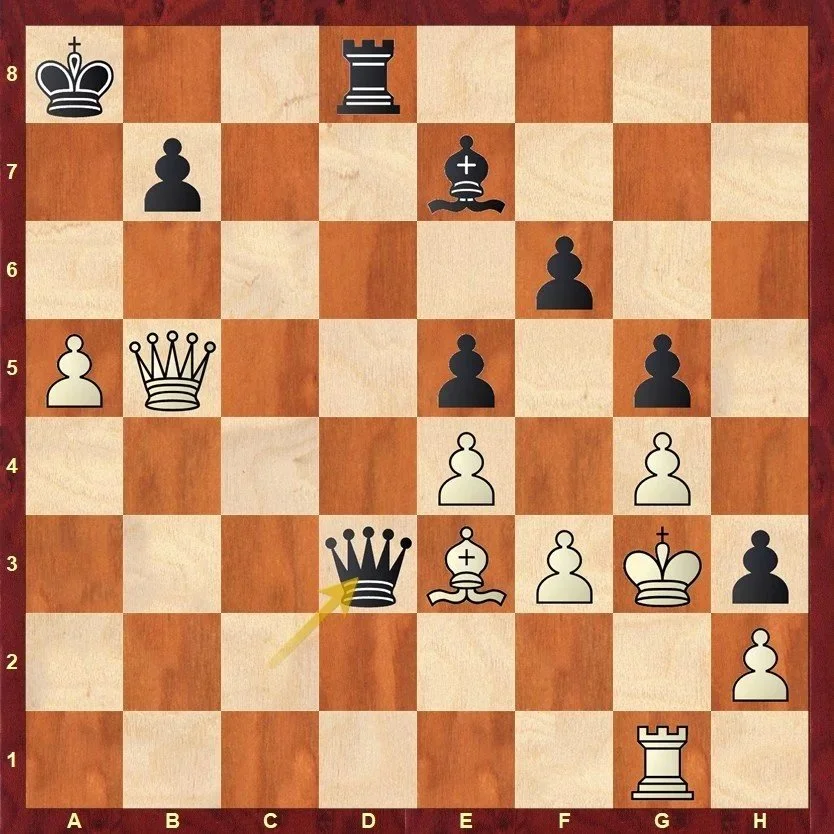
Batsiashvili just played 38…Qxd3, offering a trade of queens.
In scholastic chess, I often see kids hesitate to trade queens. There’s comfort in keeping the most powerful piece on the board as it can feel like a security blanket driving the attack. But once that “blanket” is gone, players have to rely on their fundamentals.
Part of becoming a stronger chess player is recognizing the right moment to simplify the position, transition into the endgame, and confidently convert an advantage.
Tari decided this was not the time to trade just yet and made a counter threat, 39. Qb6 threatening mate and taking more control of the board. He improved the placement of his pieces and forced 39…Qa6 Play continued with 40. Rc1 Qxb6 41. Bxb6 Rh8 42. Rd1 Kb8 43. Rd7 Re8 which brings up another critical moment for White
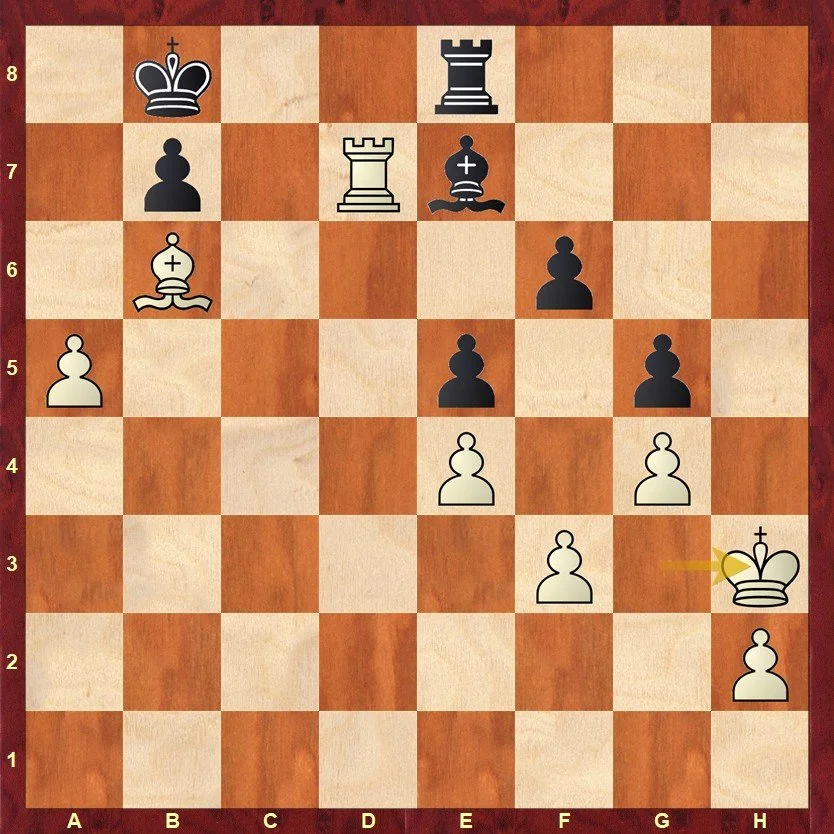
Tari just played 44. Kxh3
Black’s position is becoming very uncomfortable. White’s rook is firmly planted on the 7th rank, and the bishop on b6 is shutting down the black king. The black rook is stuck defending the bishop, leaving no real counterplay.
With everything under control, White confidently takes the pawn on h3. Black can throw in a check on h8, but the pressure is mounting. White is squeezing the position like a boa constrictor, tightening with each move. Play continued with 44… Kc8 45. Rc7+ Kb8 46. Kg3 Bb4 47. Rf7 Bd2 48. Rd7 Bf4+ 49. Kg2 Kc8 50. Rd6 Rf8
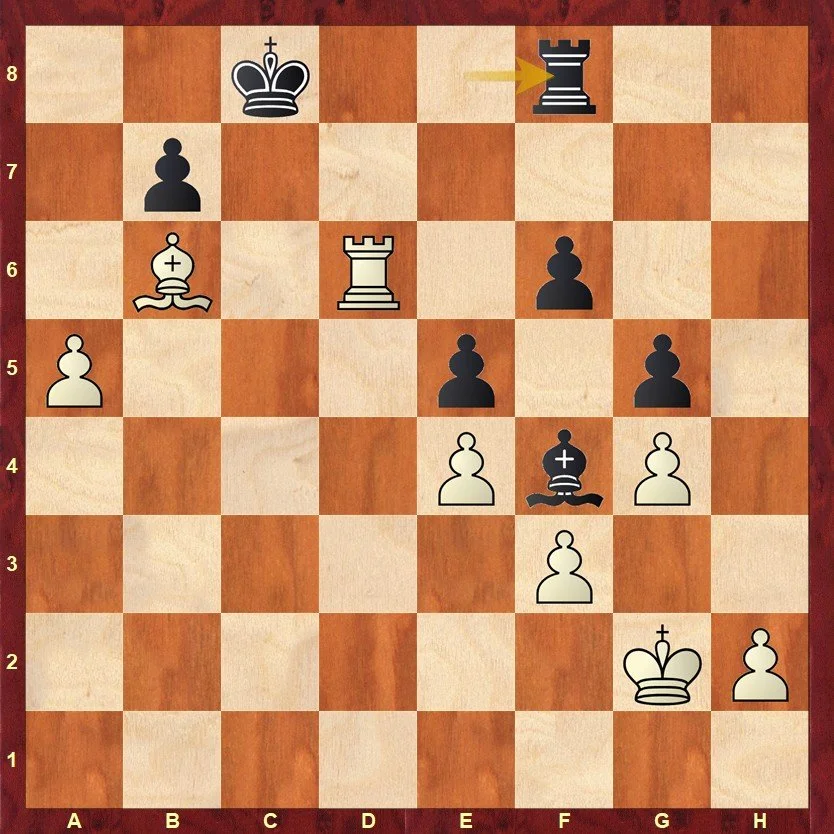
Black has to play serious defense here. The rook cannot leave the 8th rank due to checkmate and they also have to defend their weak pawns
51. Rd1 Re8 52. h3 Rg8 53. Kf2 Rh8 Black may be targeting the pawn but they cannot capture it due to Rd8# 54. Ke2 Rf8 55. Rd5 Re8
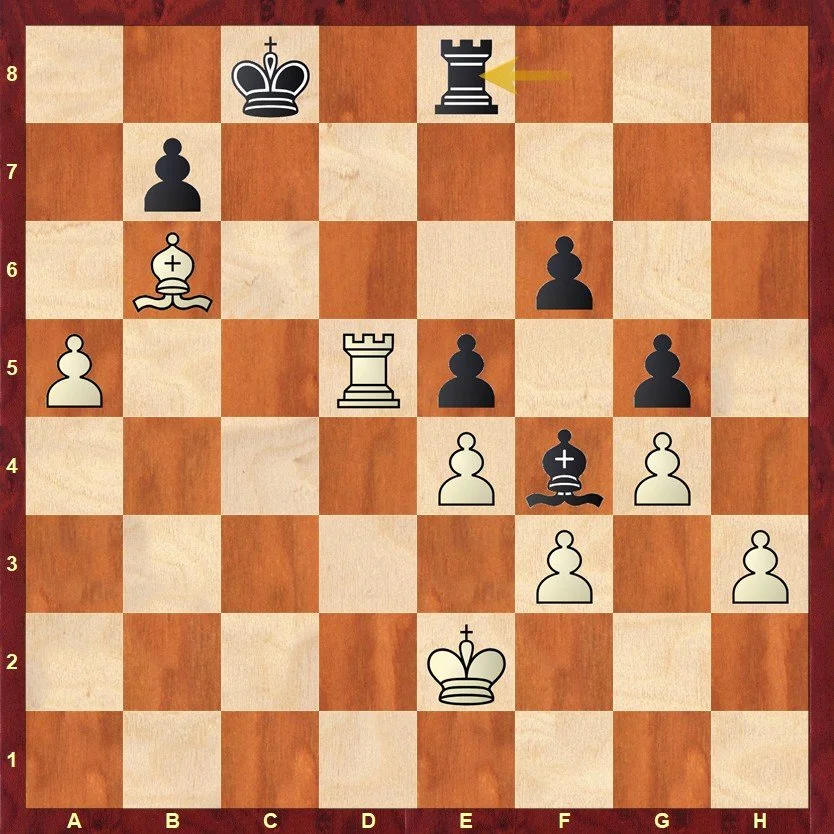
Tari sets up his rook on d5 to give the white king safe passage across the board. This is a great example of an important endgame principle: the king is no longer just something to protect, it becomes a powerful fighting piece!
Play continues with 56. Kd3 Rh8 57. Kc2 Re8 58. Kb3 Rh8 59. Rd3 Re8 60. Kc4 Bc1 61. Rc3 Bb2 62. Rc2 Ba3?
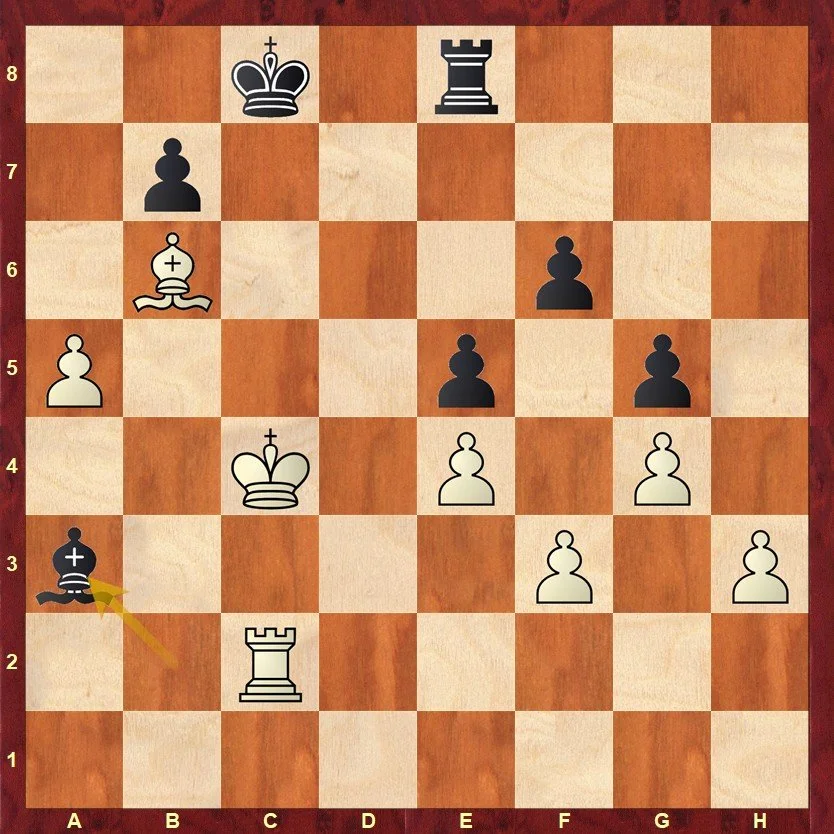
Black blunders, likely under the pressure of the position. White simply goes Kb3 and wins the black bishop with a discovery check
Key takeaways:
Visit Reykjavik at least once. It’s a special place for any chess player.
Don’t be afraid to trade queens when it benefits you, let go of the “security blanket” at the right moment.
A rook on the 7th rank is a powerful asset and can completely stifle your opponent’s position.
Activate your king in the endgame. Treat it as a true fighting piece.
If your child is learning concepts like these: when to trade pieces, how to handle pressure, or how to convert an advantage we would love to help guide them.
At Growing Minds Chess Academy, we work with students of all levels, from beginners to tournament players.
Feel free to reach out to learn more about private lessons or group classes
See you next week for the next move with Coach Alanna ♟️


Photo 1: GM Tari with Alanna Katz at the 2024 FIDE Candidates
Photo 2: IM Kyron Griffith helping Growing Minds Chess Academy students from Avenues: The World School win 2nd place at the 2015 National Chess Championship